
Today is Workers’ Day.
A day set aside to celebrate effort, contribution, and the dignity of work.
But beyond the celebration, there is a quieter question many professionals are silently asking:
“When did my work become my identity?”
Somewhere along the journey, between deadlines, promotions, responsibilities, and expectations, many of us stopped being people who have jobs and started becoming people who are their jobs.
We introduce ourselves by our titles.
We measure our worth by our output.
We evaluate our progress by how busy we are.
And slowly, almost unnoticed, we reduce ourselves to what we produce.
The Modern Worker’s Reality
The world of work has changed.
Today’s professional is expected to:
Deliver consistently under pressure
Adapt quickly to constant change
Stay available, responsive, and “on”
Learn continuously while performing daily tasks
In tech and corporate spaces especially, excellence is no longer optional, it is expected.
And while this drives growth, it also creates a silent tension:
High performance, but low emotional rest
Career progress, but internal disconnect
Achievement, but little time to experience fulfilment
Many people are succeeding externally, yet quietly struggling internally.
When Productivity Becomes Pressure
There is nothing wrong with ambition.
There is nothing wrong with working hard.
But something shifts when:
Rest begins to feel like laziness
Saying “No” feels like failure
Your value is tied only to results
You feel guilty for slowing down
This is where productivity stops being a tool and becomes pressure.
You start chasing output instead of meaning.
You prioritize expectations over alignment.
And eventually, you begin to feel disconnected from yourself.
You Are More Than Your Role
Your job is what you do.
It is not who you are.
Before the role, before the title, before the promotion, there is you:
- Your values
- Your voice
- Your purpose
- Your identity
Work is meant to express you, not replace you.
But when we don’t intentionally separate identity from career, we risk:
Losing ourselves in performance
Seeking validation from work alone
Feeling empty even after achieving milestones
This is why some people reach the top and still feel unfulfilled.
Because achievement without alignment is exhausting.
Reclaiming Your Identity
Reclaiming your identity is not about quitting your job or abandoning ambition.
It is about remembering:
Who you are outside of your work
What truly matters to you
What kind of life you want to build
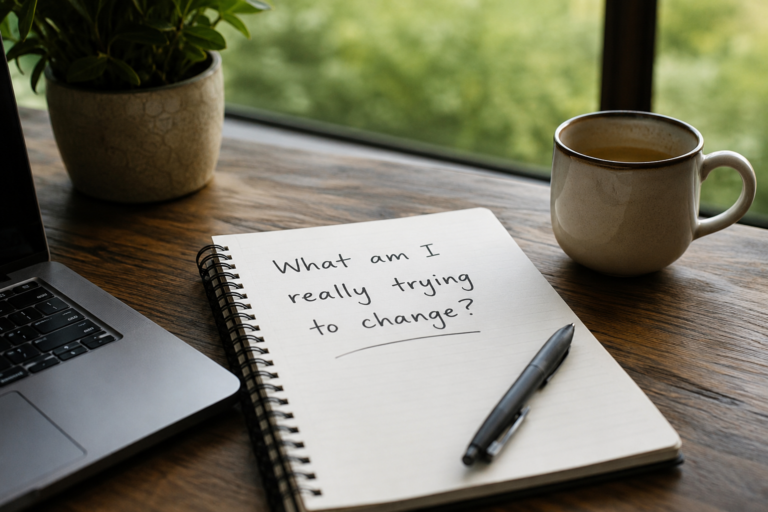
It means asking deeper questions:
Am I growing or just performing?
Does my work reflect my values?
Am I building a life or just sustaining a role?
Identity is not found in activity.
It is found in awareness.
Reclaiming Your Value
Your value is not limited to:
- Your job title
- Your salary
- Your productivity level
Your value is in:
- Your ability to think
- Your ability to adapt
- Your character
- Your perspective
- Your presence
Work can measure performance but it cannot measure your full worth.
And when you begin to understand this, something shifts:
You stop over proving.
You start showing up with clarity, not pressure.
Reclaiming Balance in a Demanding Career
Balance is often misunderstood.
It is not about doing less.
It is about doing what matters intentionally.
Reclaiming balance means:
Setting boundaries without guilt
Prioritising rest as part of growth
Creating space to think, not just react
Allowing yourself to exist beyond your role
Balance is not something you “find.”
It is something you choose repeatedly.
A New Definition of Success
What if success was not just:
- Promotion
- Salary increase
- Recognition
But also:
- Peace of mind
- Clarity of direction
- Emotional stability
- Alignment with purpose
What if success meant:
You are doing meaningful work without losing yourself in the process?
That is a success worth building.
On this Workers’ Day, let this be more than a celebration of work.
Let it be a reminder.
You are more than a worker.
You are more than your output.
You are more than your title.
You are a whole person growing, evolving, and becoming.
And your career should support that journey, not replace it.
About the Author